Torre Coit
Coit Tower, um presente para a cidade, é inconfundível no horizonte. Aprenda como chegar lá, os bairros ao redor e fatos divertidos.

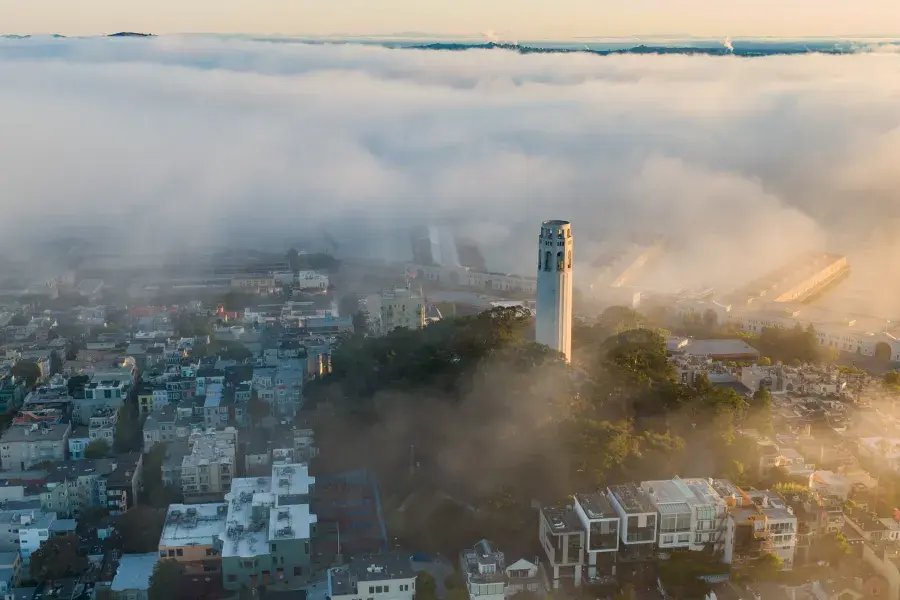
A Coit Tower se destaca como um polegar dolorido, e por um bom motivo. É uma característica definidora do horizonte de São Francisco. No topo de Telegraph Hill fica o Pioneer Park, onde fica a Coit Tower. Este parque cobre uma área de 4,89 acres (19.800 metros quadrados) e foi inaugurado oficialmente no ano de 1876. Isso significa que é muito mais antigo do que a torre, que foi concluída no início da década de 1930. E como outros edifícios icônicos da cidade, a Coit Tower é adornada com luzes de cores diferentes.
Coit Tower: Essential Facts
Coit Tower is located in the Telegraph Hill neighborhood of San Francisco, near North Beach and Fisherman's Wharf.
Visiting the Tower and exploring its grounds and murals is free. If you want to ascend to the top for a gorgeous, 360-degree view of the city, you'll have to purchase a ticket. Adults pay $11 ($8 for seniors), while children aged 12-17 pay $8 and those aged 5-11 pay $3. Visitors 4 and younger can visit for free. Tickets can not be purchased in advance and must be procured on site.
Coit Tower is open daily from 10:00 a.m. to 5:00 p.m. Ticket sales cease an hour prior to closings.
Guided tours are available for groups of 4 to 6 people. The tours last up to 40 minutes and cost $10 per person.
História da Torre Coit
No topo do histórico Telegraph Hill fica a Coit Tower de 210 pés, também conhecida como Coit Memorial Tower. Esta elegante coluna cônica foi construída em 1933, o legado da colorida Lillie Hitchcock Coit de São Francisco, que deixou um legado de US$ 125.000 "com o propósito de adicionar beleza à cidade que eu sempre amei". Henry Howard, o arquiteto, veio do mesmo escritório de arquitetura que projetou a Prefeitura de São Francisco
O lobby térreo é adornado com uma série de murais de afrescos de cerca de 30 artistas locais, retratando a vida na década de 1930 em São Francisco. Eles foram controversos nacionalmente quando abertos ao público. Os artistas e murais foram financiados pelo programa piloto de arte do New Deal do presidente Roosevelt, o Public Works of Art Project. O projeto foi um sucesso; prédios públicos em todo o país foram decorados com obras de arte semelhantes. Eles continuam sendo um olhar colorido e perspicaz para um momento difícil na história americana. Visitas guiadas com docentes estão disponíveis.
Top Things to Do At Coit Tower
Take In The View
Whether you go all the way to the top of the Tower or simply explore the park at its base, you'll be granted some stellar, panoramic views of San Francisco and the bay. On a clear day, you might even be able to see into Marin and the East Bay.
Explore the Murals
Coit Tower holds more than sweeping views; it holds a piece of American art history. Its murals came from the Public Works of Art Project, a Depression-era program that employed thousands of artists while beautifying public spaces nationwide. Coit Tower was the very first PWAP site in the country.
In 1933, 25 local artists were chosen to depict "aspects of life in California." Their work soon collided with citywide tension: a 1934 longshoremen's strike fueled fears of Communist influence, and two murals featuring bold political imagery became lightning rods for controversy. Officials delayed the tower's opening, and amid public uproar—including the violent clashes remembered as Bloody Thursday—the most provocative images were ultimately painted over.
Today, Coit Tower's murals remain one of San Francisco's most fascinating landmarks, proof that even our walls have stories to tell.
Watch for Parrots
If you visit Coit Tower, chances are good that you'll encounter the neighborhood's most famous residents: the parrots of Telegraph Hill. This population of seemingly out-of-place parrots can allegedly be traced back to a pair of exotic pets that were either set free or escaped to explore the city for themselves. Now, their numbers have grown and they are as iconic as our resident sea lions.
How to Get to Coit Tower
Public Transportation
If you're staying at hotel in SoMa or Union Square, you can catch the 8, 30, or 45 Muni buses and ride them to North Beach. Disembark along Columbus Avenue and you'll be a short walk from Coit Tower.
Ride Shares and Autonomous Vehicles
These services can get you close to Coit Tower, but be advised that the road to the Tower is steep and narrow. Your driver or vehicle may decide to only go so far, leaving you with a short walk to the summit.
Walking
You can reach Coit Tower on foot. From the west side of Telegraph Hill, there are stairs at the end of Greenwich Street, one block east of Grant Avenue. More adventurous, urban hiker-types might prefer to take the Greenwich Street steps from the east side of the hill, which are captivating but noticeably steeper.
FIND MORE HIDDEN STAIRS IN SAN FRANCISCO
Driving
Simply put: don't. Parking at Telegraph Hill is extremely limited. Leave your rental car in its spot and choose one of these other ways to visit Coit Tower.

Inside Tips for Visiting Coit Tower
- Go early. You'll beat the crowds, avoid a longer wait for the elevator to the top, and have better visibility before Karl the Fog makes his regular afternoon appearance.
- Be patient. The tower's elevator is nearly 90 years old and could be out of service during your visit. The climb is 13 flights of stairs, if you're up for it.
- Give yourself time. Most visitors spend up to two hours at Coit Tower. Plan accordingly so you can enjoy it without feeling rushed.
Things to Do Near Coit Tower
From the top of Telegraph Hill, you can get inspiration for how to spend the rest of your day in the nearby neighborhoods.
Chinatown
San Francisco's Chinatown is the oldest and largest in North America. Walk under the Dragon Gate at Grant Avenue and Bush Street and begin your exploration of narrow streets lined with lanterns, souvenir shops, and pagoda-topped buildings. For the real feel of the neighborhood, slip off the main drag into the alleys. Ross Alley is home to the Golden Gate Fortune Cookie Factory, a tiny storefront where you can watch workers hand-fold fortune cookies on a hot griddle exactly as they have for decades (tip a dollar if you take photos). A few blocks over, Waverly Place is quieter and more contemplative, home to ornate temple buildings and some of the neighborhood's oldest architecture. If you time it right, the Chinese Historical Society of America museum is worth a stop for context on the neighborhood's deep and often difficult history. As for dining, you can't ever enter Chinatown and leave hungry. The authentic options here are endless and all worth a taste!
North Beach
Once home to Italian fishing families and later the epicenter of the Beat Generation, North Beach has never quite let go of either identity. You'll find espresso bars next to decades-old delis, and literary ghosts on every corner. Visit City Lights Bookstore, the independent shop opened in 1953 by poet Lawrence Ferlinghetti that became ground zero for the Beat movement. For caffeine with history, Caffe Trieste claims the title of the West Coast's first espresso café, opened in 1956, and is still family-run with the same old-fashioned, checkered-tablecloth energy. When you need air, Washington Square Park is the neighborhood's green heart, framed by the twin spires of Saints Peter and Paul Church, where Marilyn Monroe and Joe DiMaggio posed for their wedding photos. North Beach takes its Italian food seriously. Molinari Delicatessen, slicing salumi since 1896, makes what many consider the definitive North Beach sandwich. Tony's Pizza Napoletana is run by Tony Gemignani, a certified World Pizza Champion who offers a dozen different pizza styles on one menu, from Neapolitan to Detroit-style. And Liguria Bakery is the neighborhood's most charming institution: cash-only and family-run since 1911, they close the moment the day's batch sells out. Plan accordingly!
Fisherman's Wharf
Fisherman's Wharf where San Francisco's working waterfront history meets full-tilt, family-friendly spectacle, and there's a reason it's been drawing crowds for over a century. PIER 39 is home to the neighborhood's most famous residents: a boisterous colony of sea lions that showed up uninvited after the 1989 Loma Prieta earthquake and simply never left. They're free to visit and endlessly entertaining. For history buffs, a trip to Alcatraz Island from Pier 33 is essential. The ferry ride alone offers some of the best skyline views in the city, and the self-guided audio tour, narrated in part by former guards and inmates, is genuinely gripping (buy tickets well in advance). The Musée Mécanique is a free arcade museum packed with antique coin-operated machines and fortune tellers. If you're hungry, Boudin Bakery has used the very same sourdough starter since 1849—and it never disappoints. Their flagship location lets you watch bakers hand-shape loaves right through the bakery window.
Frequently Asked
Questions
Here is everything you need to know to include Coit Tower in your San Francisco itinerary.
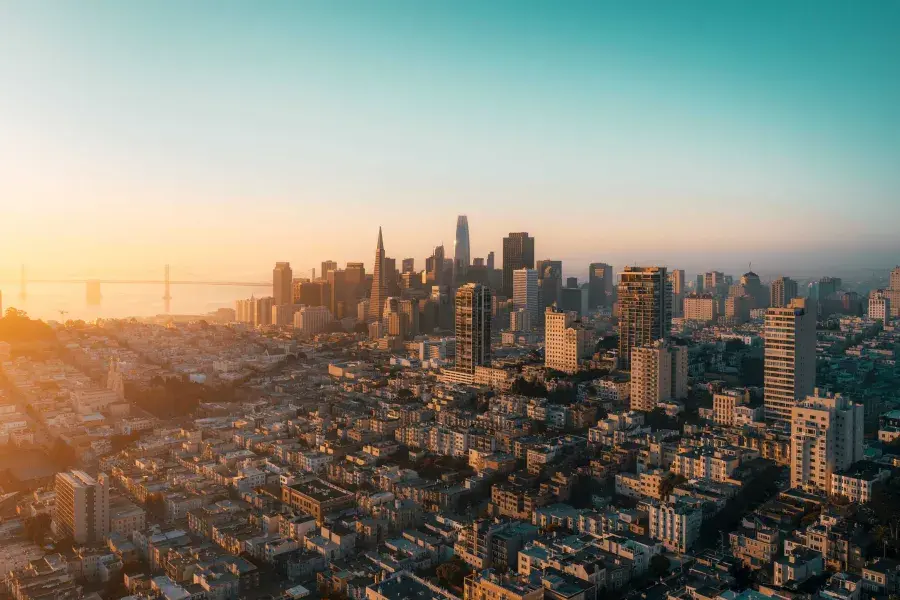
Caminhando pela história das mulheres em SF
Este passeio autoguiado pela história das mulheres levará você pelos bairros mais famosos de São Francisco e pelos nossos ícones mais amados.

Coração da Cidade: North Beach
A Coit Tower fica no topo de Telegraph Hill, o ponto mais alto de North Beach, em São Francisco. Veja esse bairro famoso pelos olhos e palavras de seus moradores.
São Francisco
Atrações icônicas
Saiba tudo sobre como visitar os pontos turísticos e atrações mais emblemáticos de São Francisco, incluindo dicas privilegiadas, informações para visitantes e até mesmo alguns fatos pouco conhecidos.
Todos os ícones SF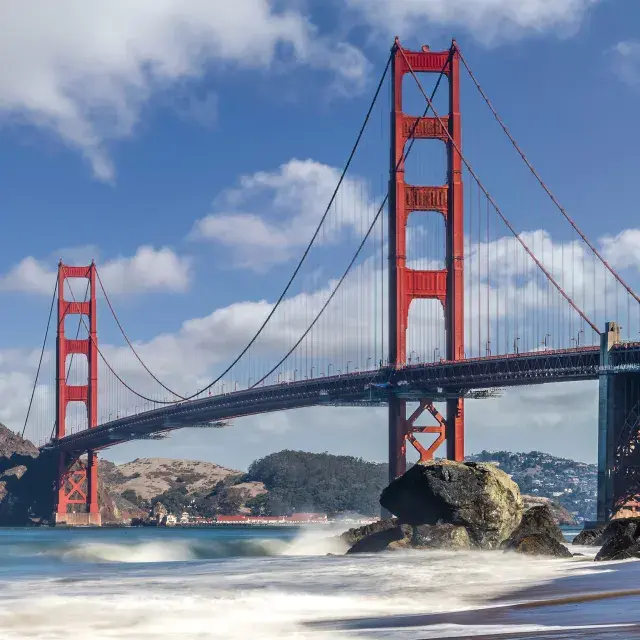
A Golden Gate Bridge é a número 1 na lista de todos os visitantes. Saiba como chegar, informações sobre os horários mais fotogênicos para visitar, bairros próximos e muito mais.

Alcatraz , uma antiga prisão, agora é um parque nacional e uma das atrações mais populares da cidade. Saiba tudo sobre a visita a "The Rock".

Os teleféricos de São Francisco deixaram sua marca não apenas na cidade, mas também na cultura pop. Aprenda a percorrer esses marcos históricos nacionais em movimento.

Se há uma parte da cidade que os visitantes — tanto os que vêm pela primeira vez quanto os que vêm muitas vezes — associam a São Francisco, é o Fisherman's Wharf.
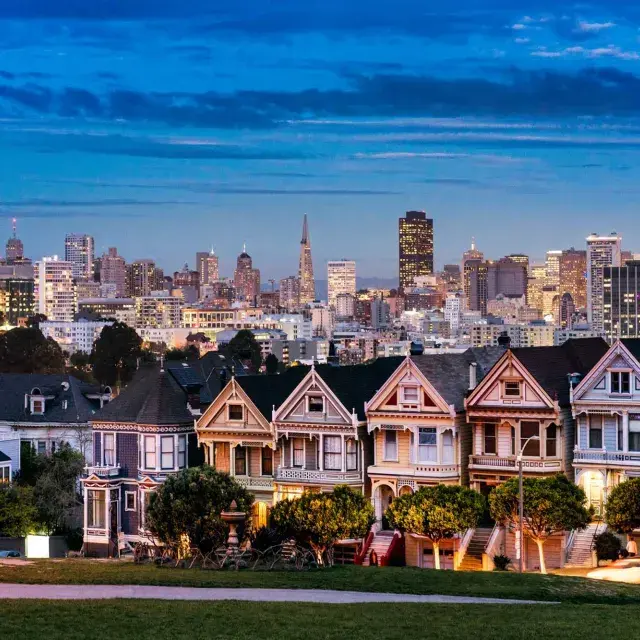
As Painted Ladies são as moças mais bonitas de São Francisco, especialmente contra aquele cenário de cair o queixo. Veja como encontrá-las, fatos divertidos e o que fazer no bairro.

Tudo o que você precisava saber sobre a Lombard Street, “A rua mais torta do mundo”, um dos pontos turísticos mais famosos de São Francisco.